

 ReachExtra
Jose Antonio Ramos, a hairdresser from Taraguilla, is the driving force behind this initiative which helps any female patient facing hairless, irrespective of their financial situation
11 years ago, by pure chance, Jose Antonio Ramos, a hairdresser from Taraguillas, realised the value of a wig…. a value that goes beyond the purely physical or commercial price, which becomes absolutely prohibitive when a woman, mainly, needs to pay for it but cannot.
This was the start of Charity Wigs Andalusia, a humanitarian initiative that aims to change the difficulties encountered day in day out by cancer patients; patients who cannot face the added cost, emotional and financial, of not wanting to cover their head with a scarf when they lose their hair.

“While buying products for my business, I met a lady who wanted to buy a wig for her daughter and the price that she was asked for was nearly 600 euros (approximately £550) and this shocked me, so I wanted to find out how much it would cost if I, as a hairdresser, bought it……
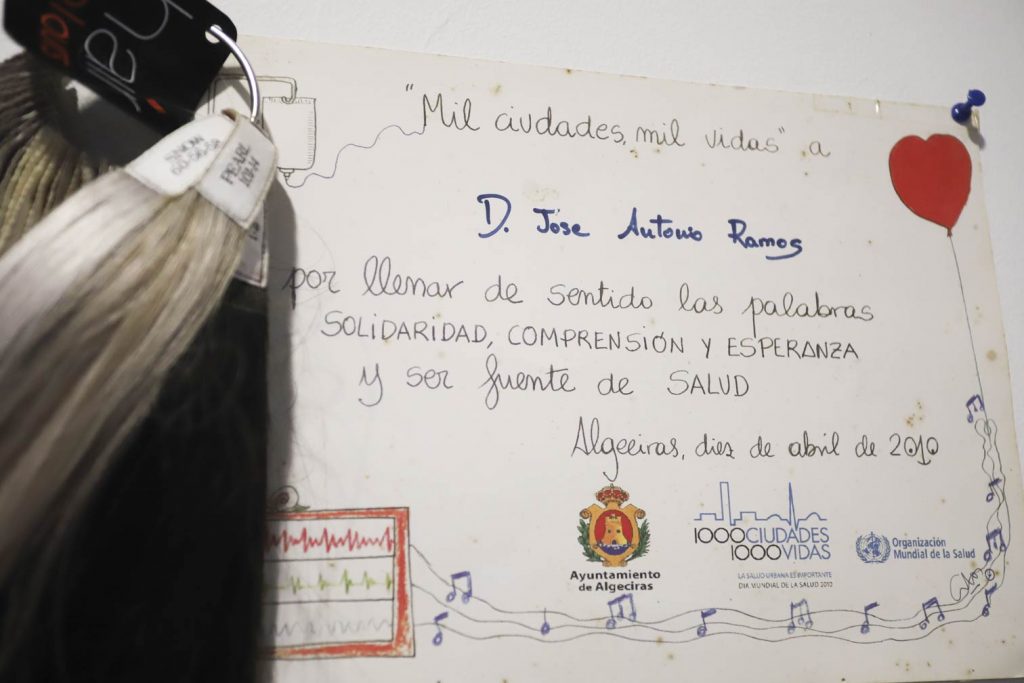
And it so happened that I could get it for one hundred and fifty euros more or less. I was a bit struck by this, and from then on, every time I heard about someone I knew who was undergoing treatment, and needed a wig, I would charge it as if I was getting it and would sell it to them at cost price”.
Ramos, who has himself lost a relative to cancer, decided that he could do more to make life easier for women who “have enough on their plate without having to pay such a high price, when what we’re talking about is not a whim, but an emotional need, which should be covered by Social Security”. As a result, and with growing demand, an association was launched, which after five years has provided over over 500 wigs.

With the help of businesses and participating entities, like Acerinox, Maersk and the Algeciras Port Authority, together with private donations, the association buys quality wigs, made with natural hair, which are then sold at cost price, but people can also “hire”, by donating 60 euros (approximately £50), synthetic monofilament wigs, a material that is indistinguishable from human hair, and which, once the patient is in remission, can be returned to the association.
This donation helps other people who cannot buy one to get a wig, on condition they return it when they recover. The association cleans the used wigs and prepares them for use, thereby extending the shelf life.
But the work of Charity Wigs, which in special cases also works with Mechones Solidarios (or Charity Highlights), is not limited to providing wigs; it provides an extra personalized advice service.
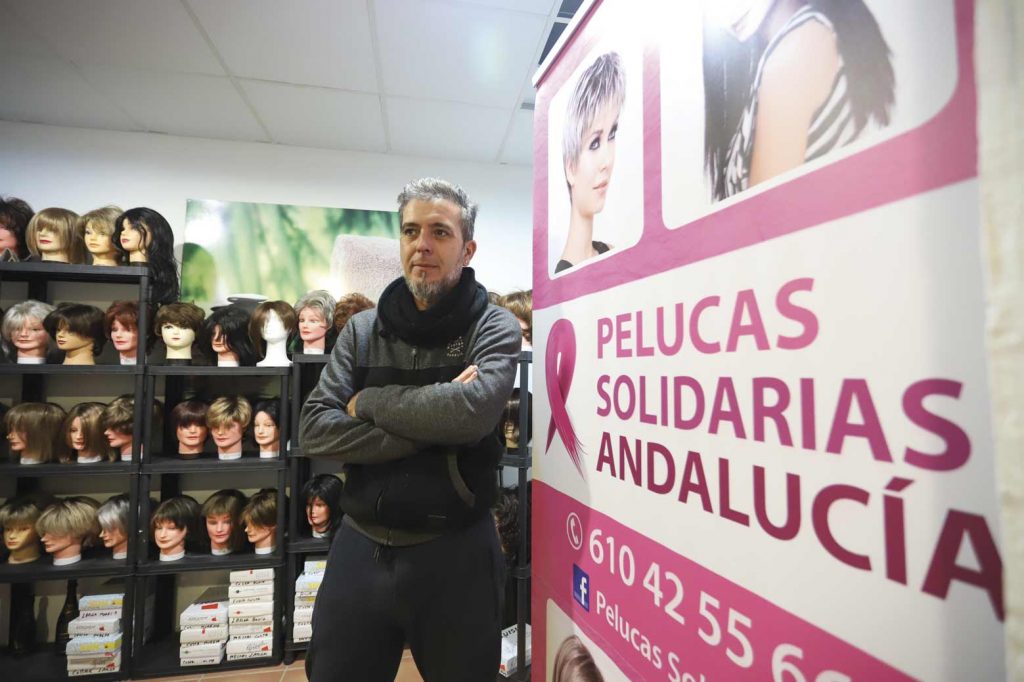
“When someone comes here, many referred by oncologists, from state and private hospitals, we speak to them very clearly, and very carefully, but without masking reality; we tell them what is going to happen: they will start to lose their hair during specific phases of the treatment, at around day 18 of the first chemo session…..and that at that precise moment, without waiting for things to get worse, is when they need to come to us: we shave their hair off and fit the wig they have already chosen, in their tone and hairstyle, so you can’t notice the change”.
Most of the users of Charity Wigs are women, but Ramos is aware that the number of men, while still very small, could increase with time.
“Today’s guys are more into aesthetics than was previously the case, and although a bald headed man is no longer seen as strange thing, but something normal, there will be more men who, being able to chose, would prefer to keep the look they had before the illness”.
There was only one detail that Ramos did not tell us about this story: personal involvement, the heart and soul. “This has been the hardest thing, especially at the start: to learn to talk to those people, look them in the face, those 20, 30, 40 year old women, pregnant women, without having a clue what to say to them, because not everyone reacts the same……
Now I cope with it a lot better, though there are still situations that break you, but also lovely moments, like when I saw this woman come in through the door, a woman who had been treated while she was pregnant and came in to bring back the wig with her baby in her arms”.
