

 ReachExtra
We walk the streets of Algeciras where the universal guitar genius grew up, along a cultural route intended to make young and old feel proud of their neighbourhood
At about 10 o’clock on a cold and sunny morning at the end of November, a group of Year 3 primary school children observe a plaque that says, in number 8 calle San Francisco Algeciras, ‘Francisco Sanchez Gomez’, the universal guitar genius who would later become the legend known as Paco de Lucia (born on the 21 December 1949).
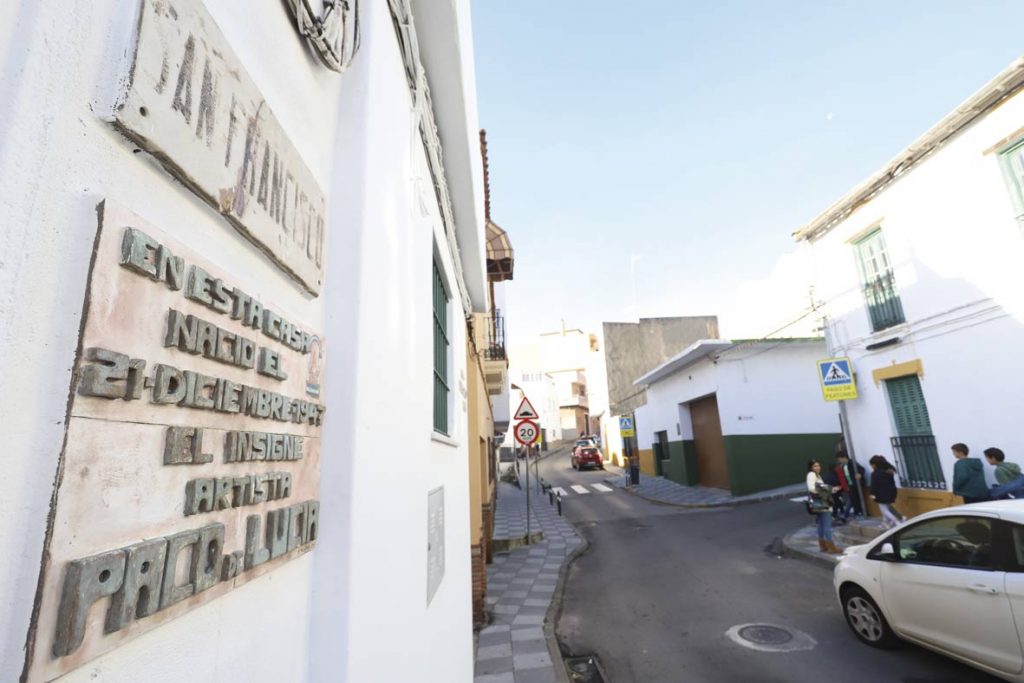
The walk that takes them from school in La Bajadilla to La Fuentenueva carries on along calle Almeria, by San Francisco School, which in the 50s was the house where don Isidro, a teacher, taught kids like Paco; the walk then leads them to the corner of calle Soria, the original site of Melchor’s allotment.

To their surprise, the children learn of the corner of calle Tetuan and calle Madrid that at the time La Bajadilla, their neighbourhood, made up of two hills, a drovers’ path and the flats, through which flowed the river, was almost entirely countryside… and thus, one surprise after another, they reach the corner of calle Barcelona, where they discover the house where young Paco moved to with his family and where he would later learn to play the guitar, hour after hour in a disciplined and tenacious manner, encouraged by his father, Antonio. Spurred on by his own creativity, he learned to play like no one ever before.
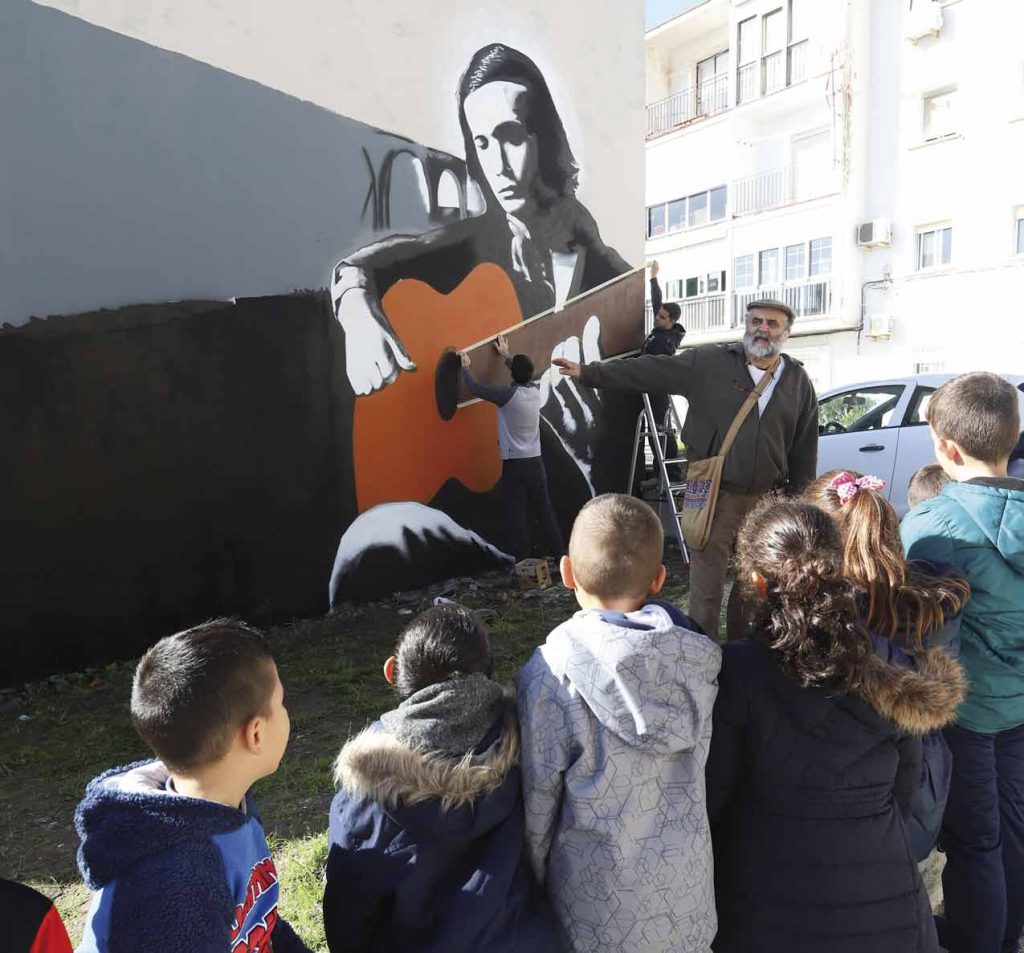
Juan Leon Moriche, the promoter of the initiative and tour guide tells us that one of the project’s aims, with the financial backing of the Cadiz Provincial Council, is “to reinforce the self-esteem of students of Campo de Gibraltar and San Francisco Schools so that they feel proud to live in the very neighbourhood where Paco de Lucia, an example of constant work and effort to learn day in day out, lived, played, studied and learned to play the guitar”.
The aim is also to enrich the neighbourhood’s cultural and social life, improve the neighbours’ self-esteem, and end the stigma and bad name of the Campo de Gibraltar School – helping to break the dynamics that made it known as a “ghetto” school – striving hard so that the rest of the city sees it as it is: a model of good practice in education. Along with 44 guided routes for students, the project also includes an essay-writing competition and a huge mural on one of the school’s side walls, next to Avenida de La Cañá.

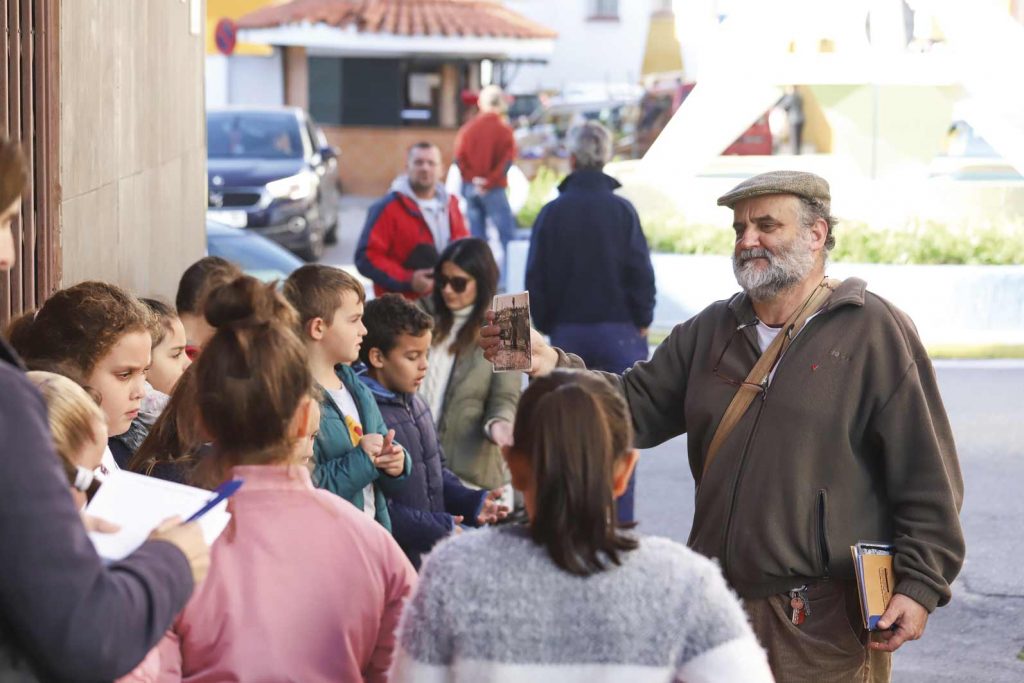
Half way along the route, at Fuente España, the young ramblers discover that in those days there were no taps, and that the young Paco, like many others, helped at home by carrying out tasks like going to the fountain to fetch water. Despite hardships, “the son of the Portuguese, Paco de Lucia, as he was known by the neighbours, was an unassuming yet happy lad who grew up playing with friends in the street, loved by his family, and because of that, his source of inspiration when it came to composing was always his childhood”.
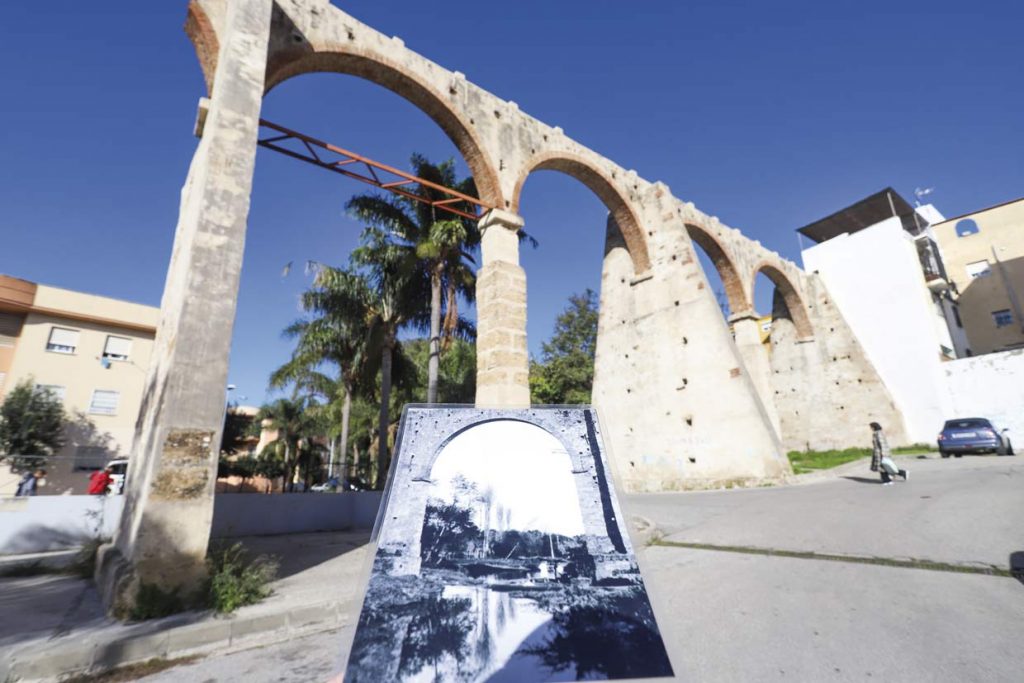
The route ends in calle Huelva, having gone along Avenida Agua Marina and the arches of the old aqueduct, where the guide explains the Arab origin of the word “flamenco”…. That same flamenco that the composer of “Entre Dos Aguas” listened to as a child, since when his sister Maria sung to him, in that house in La Bajadilla which would remain forever untouched in his heart and memory.
