

 ReachExtra
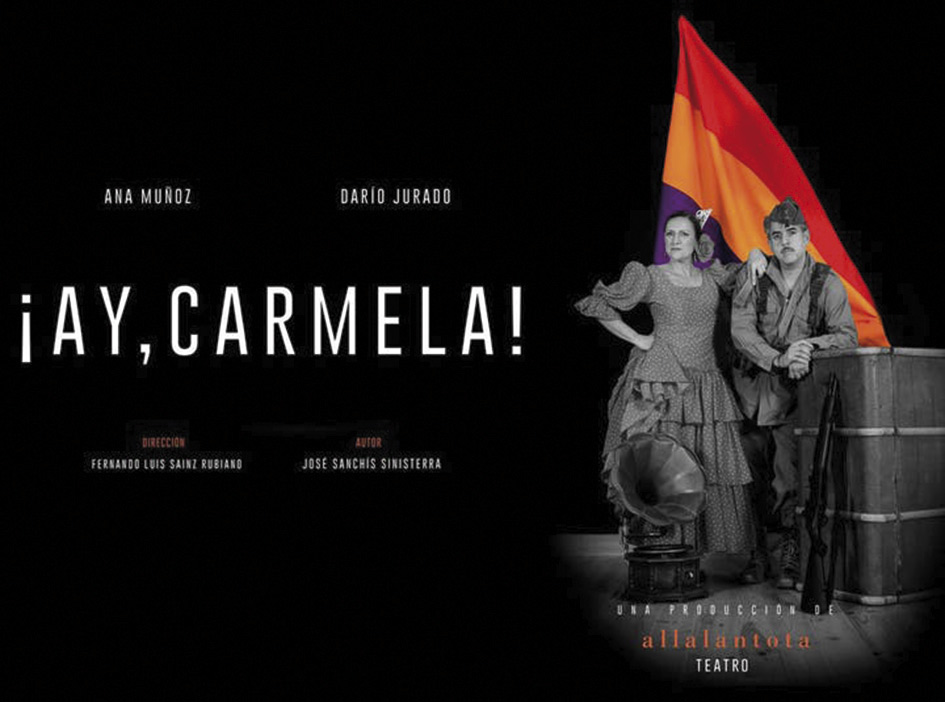
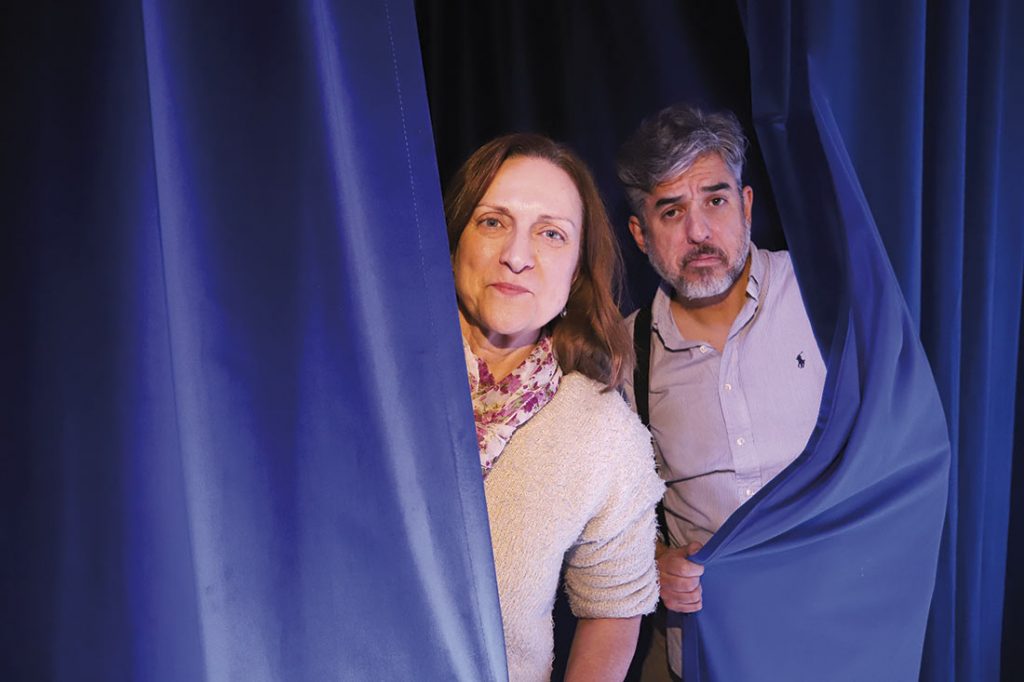
Following its successful premiere in Algeciras, actors Darío Jurado and Ana Muñoz, from Allalantota Teatro, are taking their theatrical adaptation of “¡Ay Carmela!” throughout Spain.
Few people are capable of transmitting so much excitement through their gaze as Darío Jurado from Algeciras when he talks about his vocation; the theatre, and a project that for the past five months has been the focus of all his energy at the theatre company Allalantota Teatro: “¡Ay, Carmela!”
A theatrical adaptation with flamenco touches based on José Sanchís Sinisterra’s best known work, which has raised great expectations in Algeciras where it has premiered with a double bill on February 2, with an incredible story to tell.

“It’s never too late to fight for what you really love, and I know that there’s nowhere else I am happier than on stage”, says Jurado who until now is better known as a lawyer and through his contributions in the press, radio, and television.
After taking part in several theatre plays (including the also successful “Sé infiel y no mires con quién” – (Be unfaithful and do not worry with who), “¡Ay, Carmela!” is a turning point for him, a before and after moment, a point after which nothing will be the same again.
He recalls that “This project came at one of the worst times in my life, when I was in hospital being treated for a serious health problem, with doctors more concerned than me, and thinking how true it is when they say, that your life can change in a second”. It was his friend Ana Muñoz, the “Carmela” of the play, who brought the script to the hospital.

“That night I read it, and the next day, with hardly a thought, but propelled by an inner force that I do cannot explain, I called her and said: This is madness … but we have to do it”.
At that moment began a small odyssey to make the play possible; starting with what seemed the most difficult problem: getting the performing rights. After contacting the SGAE (Spanish Society of Authors and Publishers), Jurado verified that the rights were available, but the author’s permission was required.
“This play is Sanchís Sinisterra’s ‘pride and joy’, and, naturally, he does not want just anyone to do it any old way, so the first thing was to reach out and convince him that it was a serious proposition.”
Just when Jurado was beginning to despair, and by pure chance as sometimes happens, fate had it that a doctoral thesis from the University of Valladolid on the adaptation of “¡Ay, Carmela!” to the cinema landed in his hands, and its author turned out to be a friend of his, Jorge Villa Romero. “I had met him many years ago, in Madrid, when I accidentally walked into a filming that was taking place with a hidden camera, and had to sign a document about image rights…
“I had met him many years ago, in Madrid, when I accidentally walked into a filming that was taking place with a hidden camera, and had to sign a document about image rights…

When he saw that I was from Algeciras, Jorge told me that one of his uncles the journalist Luis Romero lived here and from there we chatted, we went out to eat, and started a friendship … So when, to my surprise, I saw that Jorge was the author of that thesis, I called him, I told him all that was going on, and he gave me the little push I needed.”
The rest followed; find a director (Fernando Luis Sáinz), do all the production work, find support … and memorize a 2-hour script, in which the male character, Paulino, does not leave the stage at any time. “I was always a good student by understanding things rather than memorizing them as I have the memory of a fish.
This is why this text has been a challenge for me… That, and giving life to a character that does not have a defined personality, and who changes his attitude, and way of speaking several times throughout the play, because he is simply a survivor, and adapts to whatever is necessary to survive.”
After the great reception in Algeciras, the next thing will be to initiate an ambitious tour; one that goes further than the local area. “We are very clear about going all around Spain, to as many theatres as we can … And we are also particularly excited to take it to Gibraltar and Tangier” he reveals.
Throughout this process Jurado has had his maternal grandfather, Manuel Muñoz, in his mind. It was he who discovered Jurado’s vocation even before him. “When I was little, he would tell me there was no need for me to study, as I was a cartoonist,” he recalls with a smile.
