

 ReachExtra
Some shops in Tarifa have something in common to offer: little cats in a variety of colours made by women in Douar, a small village of around three hundred families living in difficult conditions. They, especially the children, are being looked after by a group of women, calling themselves ADDL, who work together in Spain, Morocco and Norway.
Veronica Rodriguez its chairperson and the treasurer, Charo Gil, own shops in the city.
ADDL (Asociacion y Desarrollo Douar Larache) or Association and Development Douar Larache, is the result of the ambition of a group of women who feel a need to work for others. It all started just by chance, when two Frenchwomen went into the restaurant run by Veronica, two years ago, and had the chance to explain what the association was doing; one of them, Florence, lives in Gouar, a small village on the Safi coast road, 20 kilometres from there.

“I loved it. I like helping and I’ve really always wanted to have an association and take part in something like this, but didn’t know where or how”. Vero is a committed and restless woman and she told us that aged 40 she went off on her own in her car to the Moroccan village, “I reached another world and there was Florence. There was a school in the village. Children started school at age 6, so we campaigned that it should be brought down to age 3”.
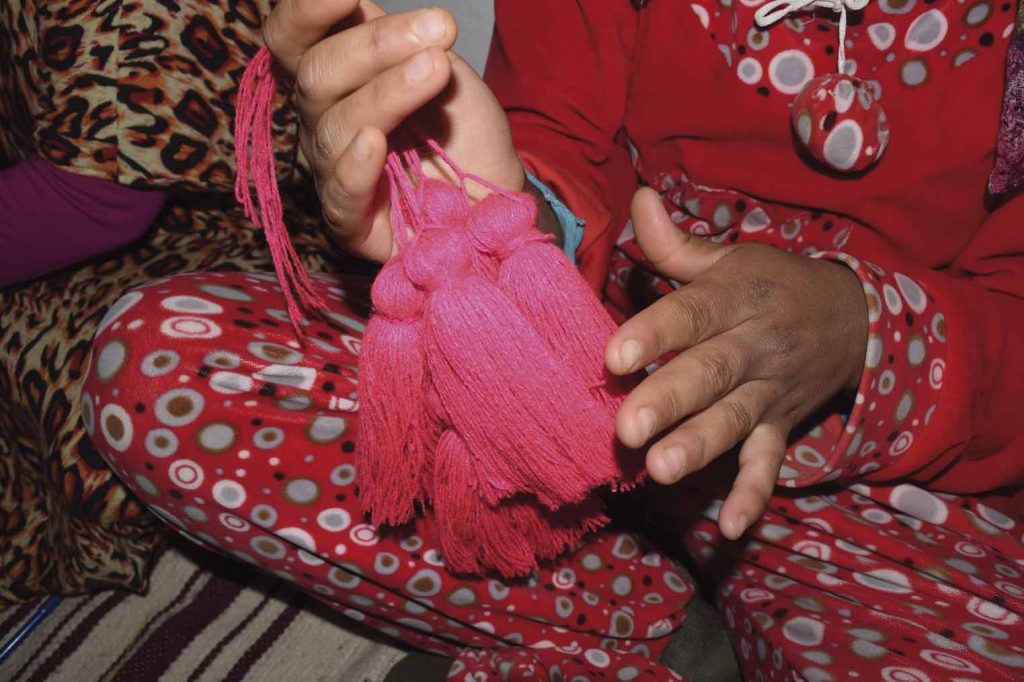
You need money to build the teaching block, to employ a teacher, to provide teaching material or for school transport and ADDL works to achieve this. Because the objective was not just to offer a better education to the children in that village but also to cover medical costs, finance the supply of potable water and help the village women with their craft work as they receive a wage for making the little cats.
This is an association made up of six restless women ready to extend their support so ADDL will now become ADDS (Asociacion por el Desarrollo de Derechos Sociales) or Association for the Development of Social Rights; it aims to widen its area of activity, focusing now on helping people with no formal education and training them for the world of work, and to this end they intend to create a training centre.

“The problem in the village is that the parents take their children out of school at the age of 16 to put them into work”, explains Vero; “we want the more able children to continue with their education and not be blocked by parents who, in most cases, need an income, lack resources and don’t see school as a necessity”.
